



As new landed properties become increasingly scarce and highly coveted in urban areas, many are turning to high rise properties to own a house instead. A high rise property is a strata-titled development built for residential purposes with more than ten storeys.
Whether it’s a single residential block or multiple, high rises include apartments, condominiums, serviced residences, and duplexes. Although it may not have the spacious land size or built-up like a landed property, living in a high rise comes with a different set of benefits!
If you’re considering buying a high rise property shortly, here is a list of property types you can consider. P/S: Some even have dual-key options, so you can rent out the other unit or move your extended family in!
8 Types Of High Rise Properties In Malaysia
1. Flats
Suitable for low to middle-income earners, flats are the smallest multi-storey building, also known as low-rise. A flat has a residential title, is usually no more than five storeys, and can have one or many blocks of flats.
As they are built based on simplicity, most flats do not have amenities like lifts, security guards, a gated compound, or an indoor car park. Even so, the built-up and living space are sufficiently sized, and the dwellings help to foster a tight-knit community and neighbourhood.
It’s also worth noting that for most high-rise houses, the higher the unit is, the more expensive it will cost. However, most flats are quite the opposite — the closer it is to the ground floor, the more valuable it becomes, as it is much more convenient than carrying your belongings up several flights of stairs.
2. Apartments
With larger built-ups, apartments are residential-titled and called medium-rise developments as they are taller than flats but shorter than most condominiums. A typical apartment measures about ten storeys tall and is a preferred option for many middle-income earners.
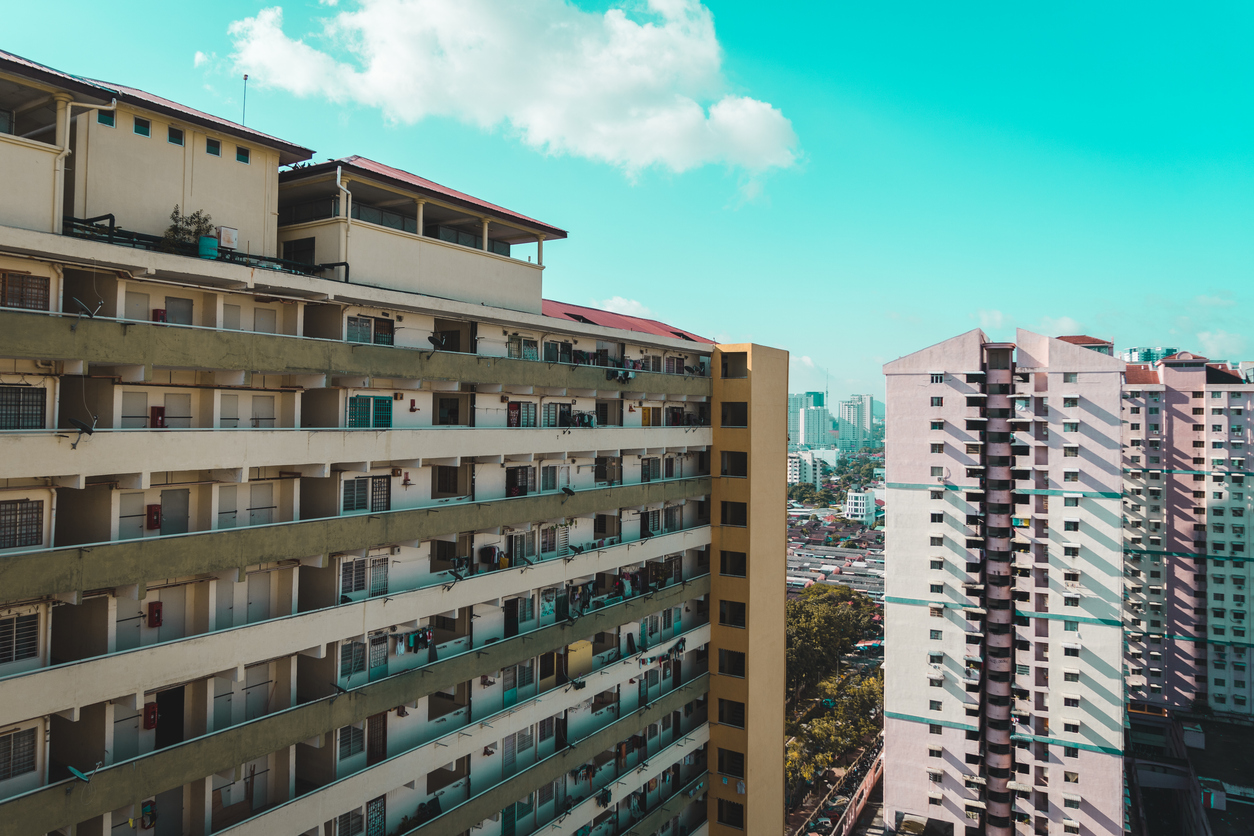
An upgrade from a flat, apartments have facilities managed by the Joint Management Body (JMB) of the building. The swimming pool, playground, covered car park, and security system are shared responsibilities, where residents pay a maintenance fee and sinking fund for the upkeep of the property.
3. Condominiums
Consider a condominium the bigger sibling of an apartment – with wider spaces, luxurious facilities, and the latest interior design trends. Condominiums carry a residential title, are usually more than ten storeys tall, and can be considered low-density depending on the number of units.
One of the differences between an apartment and a condominium is that the latter has more facilities, like in-house cafes, marts, gardens, jogging tracks, and state-of-the-art gyms. The condominium’s JMB is also in charge of maintaining the facilities and overall development for a peaceful environment to come home to.
4. Serviced Residences/Apartments/Suites
After condominiums, serviced residences are gaining popularity as chic and modern living quarters. Typically carrying a commercial title, serviced residences are also called serviced apartments or serviced suites.

Between a serviced residence and condominium, the former is usually part of a mixed development (like a shopping mall) and with top-class facilities. A serviced residence is designed to be highly convenient, and some offer hotel-level services, so keep an eye out for them to enjoy your investment.
5. SOHOs, SOFOs, SOVOs
If you’re looking for a place to call home and office, a SOHO is the ideal option as a Small Office Home Office. Generally, SOHOs are a single-storey unit in a high-rise with one or two rooms that can be used as a bedroom or office to separate work and living. The property may have a commercial title, but you can apply to convert it to a residential title.
On the other hand, SOFO, which stands for Small Office Flexible Office, and SOVO, a Small Office Versatile Office, are purely for work and with non-changeable commercial titles, also located in high-rises. Some have only one storey, but if you get lucky, you might find a two-storey SOFO/SOVO for your office needs!
6. Studios
Specially designed for singles or couples, a studio is a living space with only one room or an open layout with no separating walls for the living room, kitchen, and bedroom. That flexibility means you can place your furniture anywhere – if you want a big sleeping area and a smaller kitchen, you can!
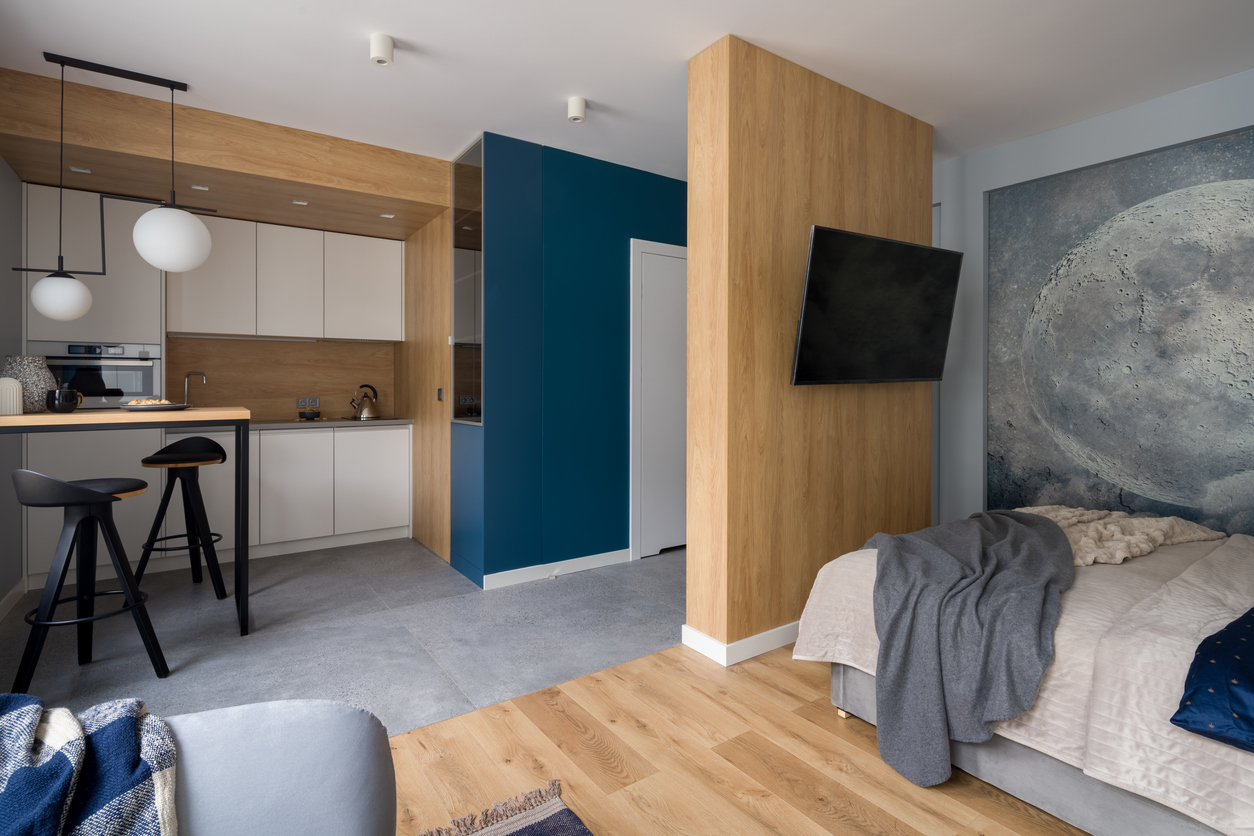
The built-ups vary in size, but ultimately, they provide privacy and comfort for adults looking for a space of their own. A high-rise may have only studio units or a mixture of studios and serviced residences, so the property title and facilities may differ.
7. Duplexes and Lofts
A duplex, a.k.a. loft, is a trendy modern home design that captures the feeling of living in a two-storey landed house but in a high-rise with facilities. Duplexes have two floors connected by a flight of stairs, with floor-to-ceiling windows that bathe the unit in natural light.
Mostly, the higher floor of the duplex is half the size of the lower floor, allowing for a makeshift indoor balcony. The bathroom is also usually on the lower floor, though certain designs may have an additional bathroom upstairs. Duplex units are housed in condominiums or serviced residences, and their property title follows suit, whether residential or commercial.
8. Penthouses
When buying a high rise property, there’s a saying that the property price increases as the level goes higher. In that sense, penthouse owners are probably the most affluent, given that they live on the highest floor of the building.

A penthouse can be single or double-storey and take up the entire floor or half of it. Certain developments also have a private lift just for them! A penthouse unit is part of a condominium or serviced residence, meaning they enjoy the same facilities, if not with the space for their private ones.
Is The High Rise Life For You?
Living in a high rise can feel like living the high life, but plan your purchase wisely so you don’t overspend. Think about your future or current needs and how this house can fulfil them.
Besides, you don’t necessarily have to buy a new property, but an existing subsale home in a strategic location can be just as beneficial. Weigh the pros and cons of both options before deciding on your dream house, and choose the one that suits you the best.