



When buying a car or home, the fine line between your financial commitments and income is a make-or-break when applying for a loan. The highest priority is to prove to the banks you can repay the loan.
Before financial institutions approve your mortgage loan or car hire purchase loan application, they will look into not just your Debt Service Ratio (DSR), but also your credit score and history.
Your monthly credit card payments are not your credit score, although it is one of the attributing factors. In reality, your credit score is determined by factors like your repayment history, current amount of debt, pending credit applications, bankruptcy status, and more.
One way to check if your credit score is healthy is to get a CTOS or CCRIS report that digs deep into all your money matters. Banks may also request a copy to evaluate your creditworthiness, so pay close attention to these two reports.
What Is CTOS?
Also known as Credit Tip-Off Service, CTOS is a privately owned credit reporting agency authorised by Bank Negara Malaysia (BNM). The agency uses a 3-digit CTOS score to evaluate your creditworthiness based on your credit history, and the score ranges from 300-850.
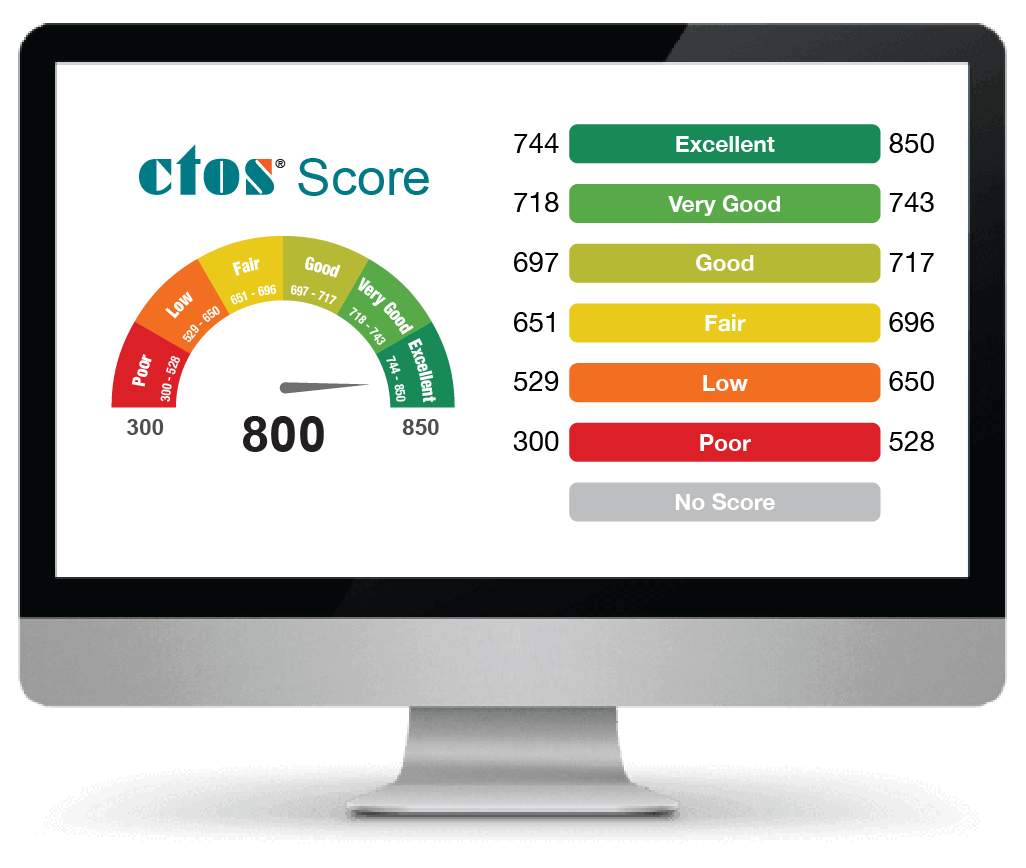
The higher your score, the greater your chances of getting your loan approved and secured. Your CTOS score indicates if you’ll get approved for credit and loans, and it is based on your past repayment behaviour to predict your future repayment.
What Does A CTOS Report Contain?
Your CTOS score is based on a credit report that collects information about you from banks, financial institutions, government agencies, and even the newspaper.
A CTOS report contains:
- A snapshot of your personal details and credit info
- Your CTOS score at the time of request
- A history of your directorships and business interests
- Banking payment records sourced from CCRIS and BNM
- Loan information such as credit cards, outstanding payments, and credit application statuses
- Legal cases filed towards you
- Bankruptcy status
To access and download your CTOS report, create a CTOS account online to obtain a MyCTOS Basic Report. The first two reports in a year are free, but a small fee is required if you need an updated report.
What Is CCRIS?
CCRIS stands for Central Credit Reference Information and is owned and operated by BNM’s Credit Bureau. The system collects and processes data from financial institutions and translates it into credit reports to assess your creditworthiness.
Unlike CTOS, CCRIS does not provide a credit score but a report that shows you all your credit details in detail.

What Does A CCRIS Report Contain?
The data in your CCRIS report is obtained from banks, financial institutions, government agencies, insurance companies, and more. It shares your credit information from the last 12 months from your request, so if you request your report in April 2024, the information recorded is from May 2023 to April 2024.
A CCRIS report contains:
- Your personal details
- Credit information such as loans, credit cards, outstanding balance, collateral, and any arrears
- Credit applications
To download your CCRIS report, register for a CCRIS account and pay RM1 to verify your identity (don’t worry, you’ll be refunded!). Once you complete the registration and login successfully, you can download a copy of your CCRIS report.
Comparing CTOS And CCRIS
A CTOS score and CCRIS report are highly recommended when applying for a loan as they are both helpful for proving your creditworthiness.
| Agency | CTOS | CCRIS |
| Ownership | A privately owned agency authorised by BNM | A credit-reporting system owned and operated by BNM’s Credit Bureau |
| Credit Information | Collects credit information from banks, financial institutions, government agencies, the newspaper, legal firms, and more | Collects credit information from banks, financial institutions, government agencies, and insurance companies |
| Credit Score / Report | Provides a CTOS score that sums up your creditworthiness | Provides a CCRIS report that financial institutions will use to evaluate your creditworthiness |
| Price | Free for the first two reports in a year, only for verified members | Free for everyone, except for a refundable RM1 identify verification |
5 Ways To Improve Your CTOS And CCRIS Score
If your score doesn’t fare as well as you like, some ways to improve your credit score are to pay your bills punctually, reduce your debt, avoid having too many credit cards, close accounts you no longer use, and seek professional help.
1. Pay your bills on time and regularly
Being late on your repayments will reflect in your credit score and worse – set you up with more debt because of late payment interest fees. Pay your bills before their due date, and set a monthly reminder so you won’t forget.

2. Keep your debts low
If you have too much debt, your creditworthiness may not be very worthy. Clear your debt by paying off as much as you can, when possible, to keep your credit history in the green. As the saying goes, keep your friends close, but keep your enemies (a.k.a. your debt) closer.
3. Don’t apply for too many credit cards or loans
We get it: different banks have different perks and you want them all, hence the thick wallet with many bank cards. Although beneficial, owning multiple credit cards or loans poses the risk of defaulting on payments and running into debt. Choose the best credit option that you need, not want.
4. Close any unused credit accounts
Too many bank accounts and not enough time to manage them all? It’s best to close your inactive credit accounts, as having one too many can make you seem high-risk. Not just that, it’ll be easier for you to keep tabs on bank accounts in your name to avoid any bank scams.

5. Seek help from a professional financial advisor
Malaysia’s Agensi Kaunseling & Pengurusan Kredit (AKPK) is a reliable agency by BNM that helps to provide debt management services, financial advice and education, and more. If you face problems managing your debt, don’t hesitate to contact AKPK to avoid snowballing debt. It’s always better to be safe than sorry!