



Are you tired of enduring the rush hour gridlock and developing sores from sitting in your car for too long during traffic?
Instead of wasting time and energy idling away doing nothing, there’s a faster alternative to get to work or back home – with a motorcycle!
But! As always, before you buy a used motorcycle for yourself or a family member, research diligently to make sure it’s a wise decision.
9 Things To Check Before Buying A Used Motorcycle
1. The Motorcycle Grant
The most important document when buying a used motorcycle is the motorcycle grant, also known as the Vehicle Ownership Certificate (VOC).
The grant resembles proof of ownership of the vehicle and contains information like the vehicle’s registration number, engine and chassis numbers, and the owner’s details. Hence, the details in the grant must match the details of the person from whom you’re buying the motorcycle.
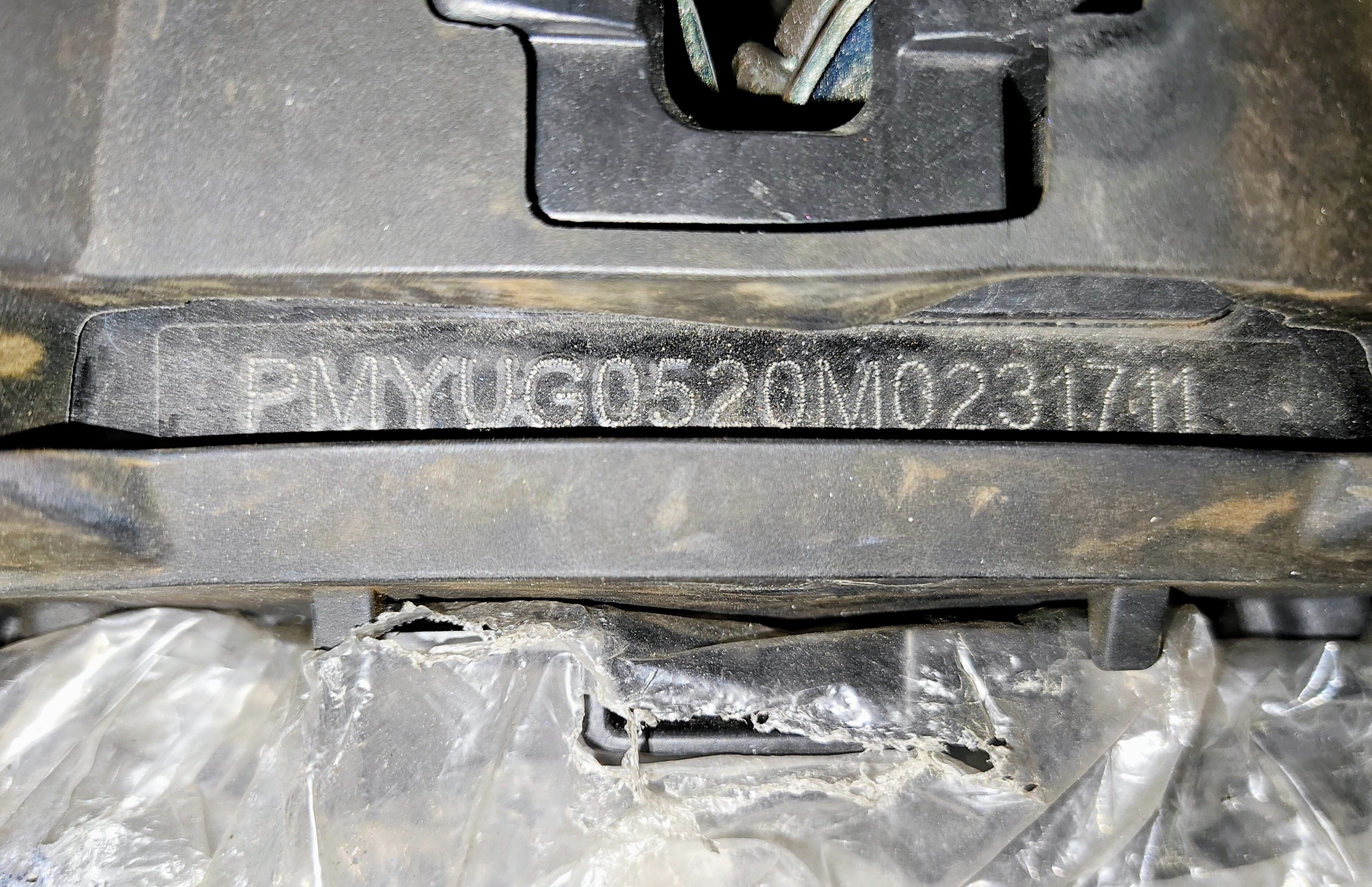
2. Vehicle Identification Number And Engine Number
Every vehicle in Malaysia has a Vehicle Identification Number (VIN): a unique 17-character code. It’s like a birth certificate and tracks the entire motorcycle – from its make and model to the manufacturing year and history (including accidents, theft, etc.)
On the other hand, the engine number is registered solely for the engine. Likewise, it has a unique code to keep track of engine parts and warranty. Before you buy, do a quick check online of the engine number to verify the vehicle’s details tally with what’s being sold.
3. The Instrument Panel
Whether digital or analogue, a motorcycle’s instrument panel (or meter cluster) typically comprises a speedometer, an RPM gauge, an odometer, a trip meter, a fuel gauge, gear indicators, and indicator lights. There may also be a combination of digital and analogue elements.
On the meter cluster, inspect carefully for tampering or coverups – misaligned numbers on the odometer, open gauges or panels, or mileage that don’t make sense given the age and use of the bike. Check that the fuel readings are accurate and the indicators light up when in use too.
4. Damage Or Accident History
Although you can check the accident history from the VIN, seeing is believing. Inspect the motorcycle for signs of crash damage, misaligned parts, or parts that have been replaced or touched up recently, including inconsistent paintwork.
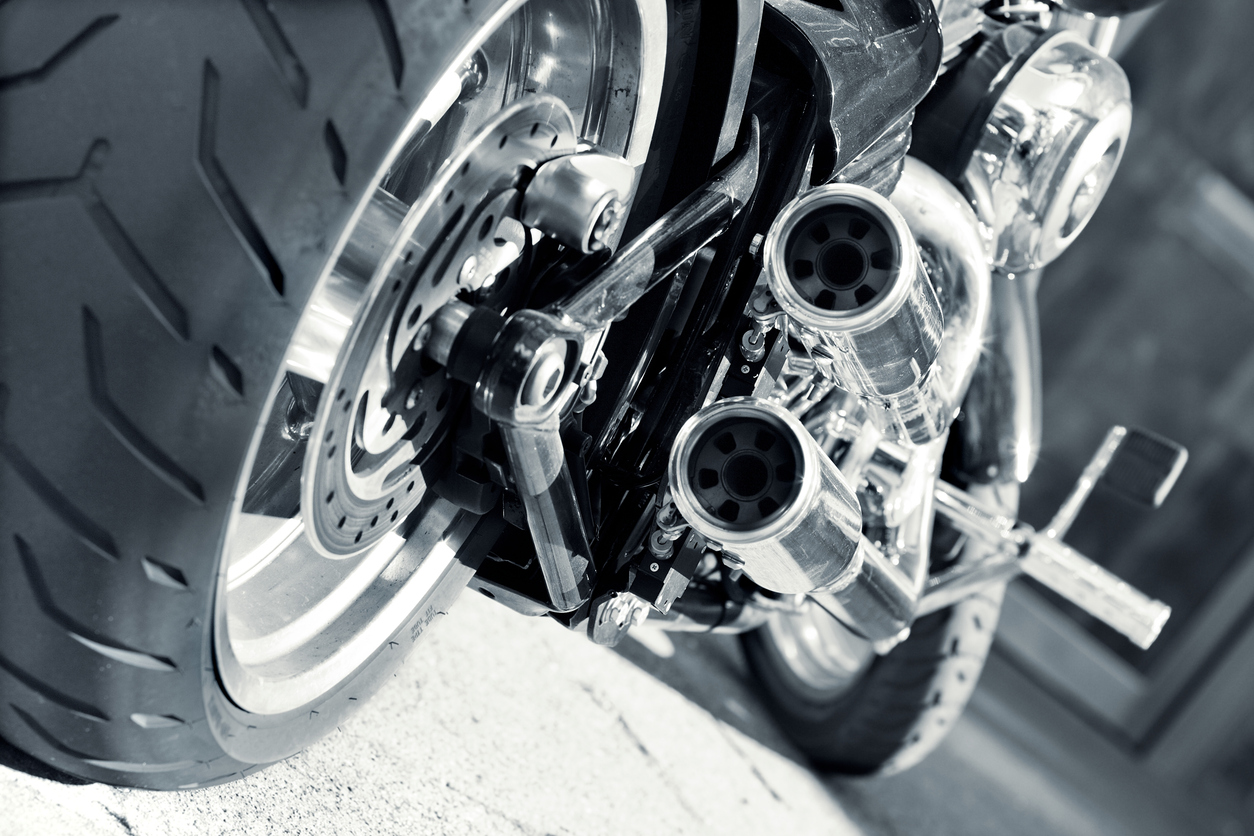
The same goes for modifications. Overly loud exhausts, ill-fitting tyres, and oversized pistons are just some of the ‘upgrades’ that go against the Vehicle Type Approval (VTA) and laws, which can result in an expensive penalty.
5. Service History
Like cars, motorcycles require regular servicing. The recommended service period is every 1-2 months, or every 1,500km – 2,000km for motorcycles 150cc and below. For motorcycles above 150cc, the service period and mileage can be stretched slightly, but it’s always best to refer to the service manual.
When enquiring about the service history, ask about the frequency of oil changes and air filters, the maintenance of the chain and belt, and coolant flushes. If the mileage runs high but has barely any service history or none at all, that’s a cause for concern; and if the seller can’t remember the last service date or doesn’t keep service records, that may indicate poor upkeep.
6. Essential Motorcycle Functions
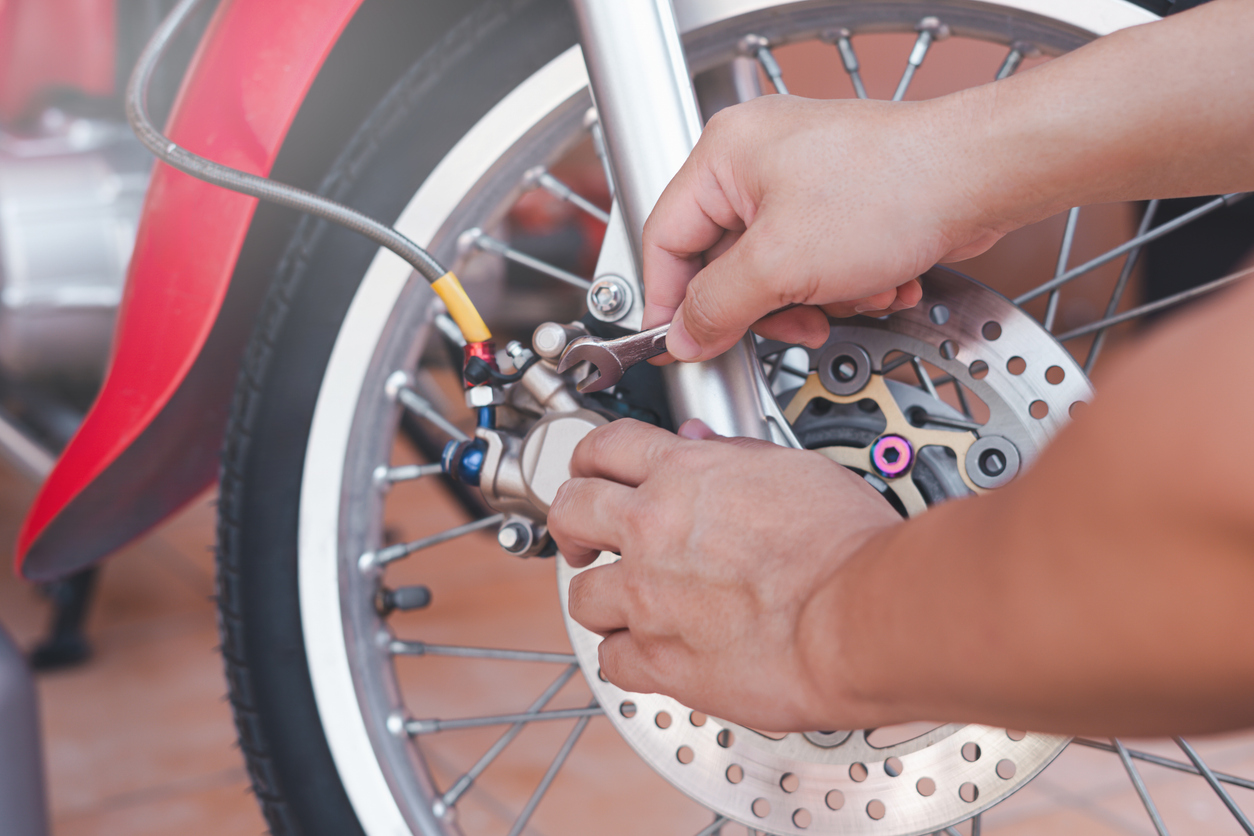
- Brake pads: Ensure the brake pad wear is even, has a decent amount of thickness, and does not have cracks or discolouration.
- Brake levers: Squeeze it to check the firmness and responsiveness.
- Chain and sprocket: No rust or damage, and the chain’s firmness is not too tight nor loose. For the sprocket, check for uneven wear and edges (teeth) that are hooked, thin, or missing, as well as rust, corrosion, proper alignment, and secure mounting to the hub.
- Frame: Signs of welding, repairs, wobbliness, or stress marks. The alignment should be straight.
- Front forks: Ensure they are straight, aligned properly, and not bent or twisted. There are also no oil leaks around the seals and no signs of rust.
- Handlebars: Straight and properly aligned.
- Honk: All components of the honk respond accordingly and produce a sound.
- Hoses: Carry out a visible inspection for cracks, leaks, and damage, and squeeze it to feel its condition.
- Lights: Front headlamps and tail lights, hazard lights, indicators, instrument panel lights (if available), and warning lights.
- Motorcycle fluids: Brake fluid, engine oil, transmission fluid, power steering fluid, coolant, and water. Ensure all the tanks do not have rust.
- Mirrors: Windscreen clarity and side mirrors.
- Suspension: Any leaks or damages in the front forks. Bounce the bike to see how smooth the suspension is, and if there’s any noise.
7. Tyre Condition
Why did the motorcycle stop working? Because it was two-tyred.
Bad motorcycle jokes aside, an underperforming set of tyres can affect your safety and stability. Look carefully for signs of dry rot, age, and cracks, and ensure the tyre treads and tread depth are in good condition.
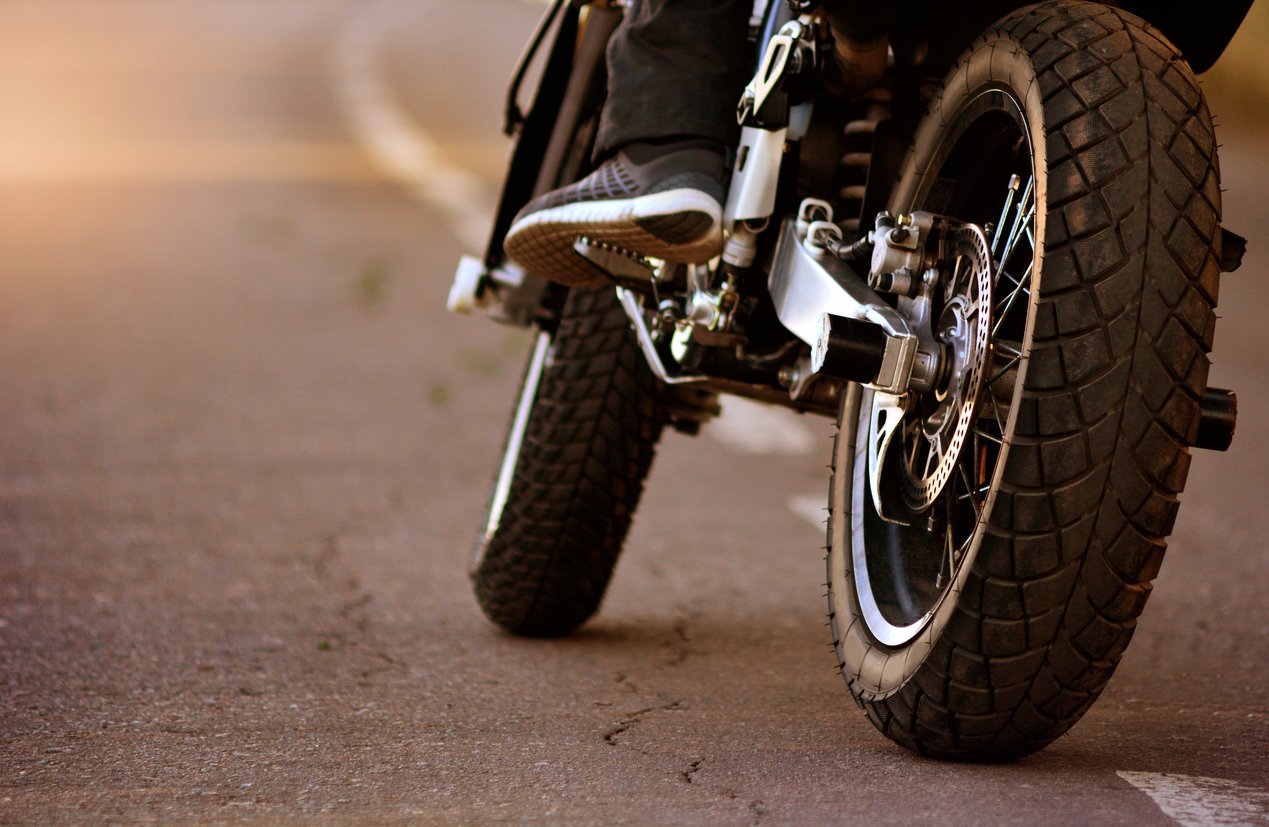
Additionally, the tyres should be evenly worn out and wobble-free. An uneven tread is caused by unbalanced weight distribution, like underflating, overflating, alignment issues; or sudden turns, braking, and accelerating. If required, replace the tyres later on with new ones for a safer ride.
8. Motorcycle Warranty
Warranty or no warranty, what’s the difference?
For starters, if you purchase a motorcycle under warranty, you won’t have to pay the full and expensive bill to repair or replace specific components. Warranty coverages differ, and for varying durations or parts, so seek clarification from the seller on the exact terms.
Alternatively, if the motorcycle is no longer under warranty but is purchased from a dealership, you could get an extended warranty from the dealer. Just ask nicely and be polite.
9. The Test Ride
Want to test-ride a used motorcycle? Here are some essential to-dos to gauge if the vehicle is right for you.
- Start the motorcycle and observe the engine’s startup when cold. The engine should fire up quickly and idle smoothly with no excessive smoke. Listen for unusual noises like rattling, knocking, or ticking too.
- Test the acceleration in different gears and observe the gear changes. It should be smooth and responsive with no hesitation, sputtering, clunking, or difficulty.
- If the motorcycle has a clutch, it should engage smoothly and with no dragging or slipping.
- Pay attention to any unusual engine noises, especially when you accelerate or put a load on the bike.
- Ensure the motorcycle steers easily with no wobbles, and is balanced and stable at different speeds and while turning.
- The suspension must absorb any bumps smoothly and comfortably with no excessive bouncing.
- Check that the front and rear brakes are firm, responsive, and work well without pulling the bike to one side.
Beyond that, the riding position and seat should provide sufficient and comfortable support. The mirrors and other instruments must work perfectly too, and there are no fluid leaks after your test ride.
Stay Calm And Ride Safe
Before you ride off into the sunset with your new wheels, carry out a full and thorough inspection of the motorcycle you’re buying. If you’re unsure, bring a trusted mechanic to inspect the bike with you. After all, a well-oiled ride is a safe one, and don’t forget your helmet too.
No helmet? No worries. Search for and buy motorcycle helmets, accessories, and other parts easily on Mudah.my, or find a cool motorcycle number plate fit for a road legend like you. Helmets on and kickstands up, let’s go!