



Ever wondered what all those letters and numbers mean when people talk about car drivetrains? Isn’t FWD an acronym for ‘forward’ like you would an email? Yes, it is, but it is also one kind of drivetrain among many others.
Firstly, What Is A Drivetrain?
A drivetrain is a collective group of components that connect the engine to the wheels and keep your car moving. Another way to think of it: a drivetrain is your skeletal and muscular system – with your skeleton as the backbone and muscles as the power to move your body.
While the engine is running, the drivetrain helps by sending power through the transmission to the drive wheels. A strong engine relies on how well the transmission delivers power to the wheels, and a smooth transmission means your car is in tip-top shape.
Now that we have a better understanding of what a drivetrain is, let’s look into the common types of drivetrains: FWD (Front-Wheel Drive), RWD (Rear-Wheel Drive), 4WD (4-Wheel Drive), and AWD (All-Wheel Drive).
What Is An FWD Car?
An FWD is one of the most common car types on the road today, found in compact cars, sedans, and more.
The car is powered by a front-wheel drive system where the front wheels provide most of the power. Besides that, the vehicle’s front also houses all the drivetrain components, which helps increase the traction of the front wheels.

Pros And Cons Of FWD Cars
| Pros | Cons |
| The lighter weight makes it more fuel-efficient | Can cause understeering issues, especially when navigating sharp corners and turns |
| Provides better traction and grip on slippery roads | Vehicle handling may be more difficult with heavy loads or high speeds |
| Has a wider and more spacious interior | Front tyres wear out quicker as the front bears most of the car’s weight |
What Is An RWD Car?
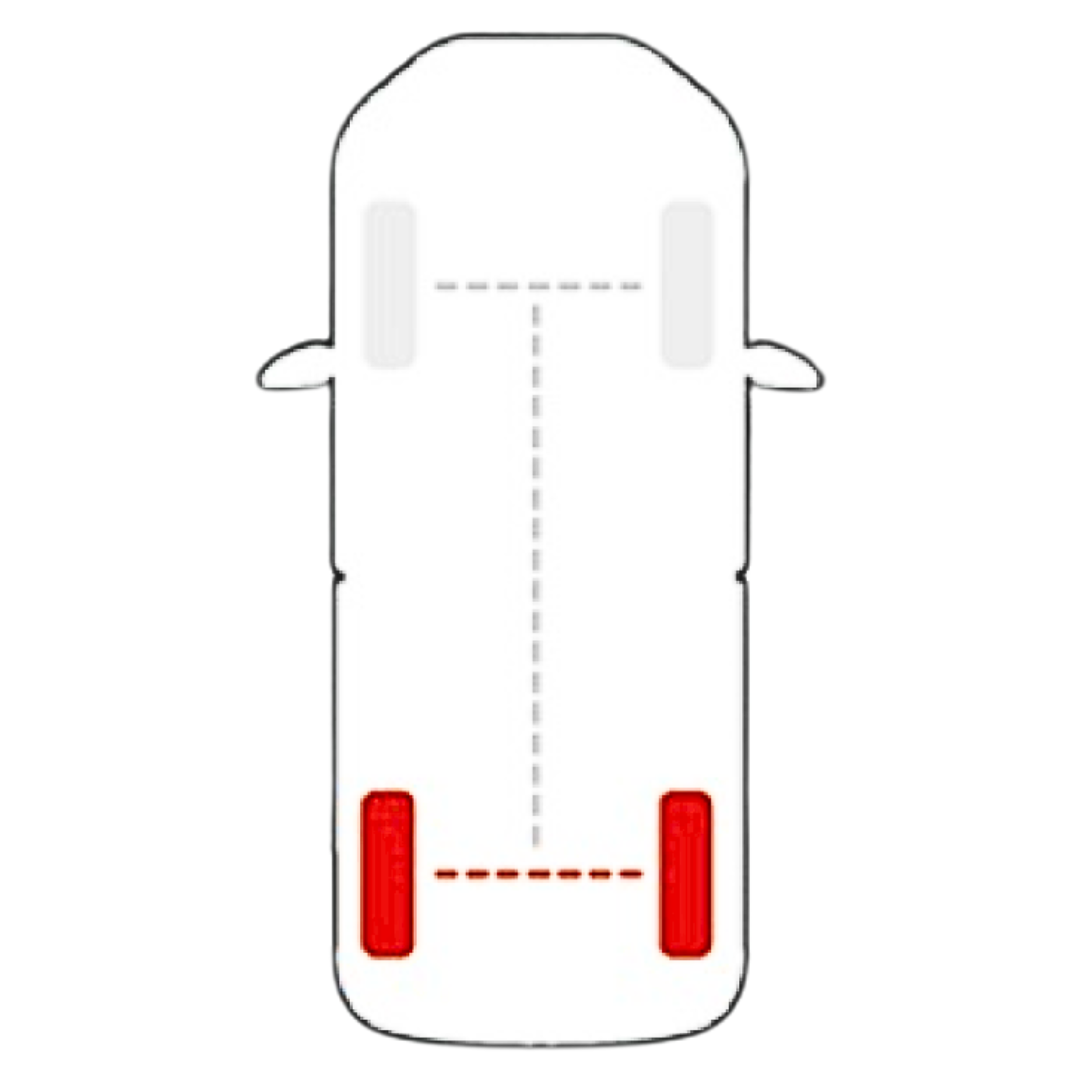
A rear-wheel drive is the opposite of a front-wheel drive and ranges from various types such as luxury cars, everyday cars, sports cars, and more. With an FWD, the two front wheels pull the car forward, but an RWD uses the two rear wheels to push the vehicle forward.
Unlike other drivetrains, the engine of an RWD can either be in the front, in the middle, or at the back of the car. The torque is sent to the two wheels at the back, allowing the vehicle to move forward while the front wheels steer.
Pros And Cons Of RWD Cars
| Pros | Cons |
| Better weight distribution ensures smoother handling, especially when turning a corner | Could be challenging to drive on slippery terrains as the driven wheels are at the back |
| Great for performance driving and motorsports | May be more expensive due to higher production costs and engineering |
| Lesser chances of torque steer, where the steering wheel shifts to one side during hard acceleration | Could have smaller interior space, depending on the design of the driveshaft |
What Is A 4WD Car?
Also known as 4×4, 4WD cars are heavy-duty vehicles that shine in conditions that are muddy, sandy, and grassy. While suitable for everyday driving, they are built differently to navigate demanding terrains.
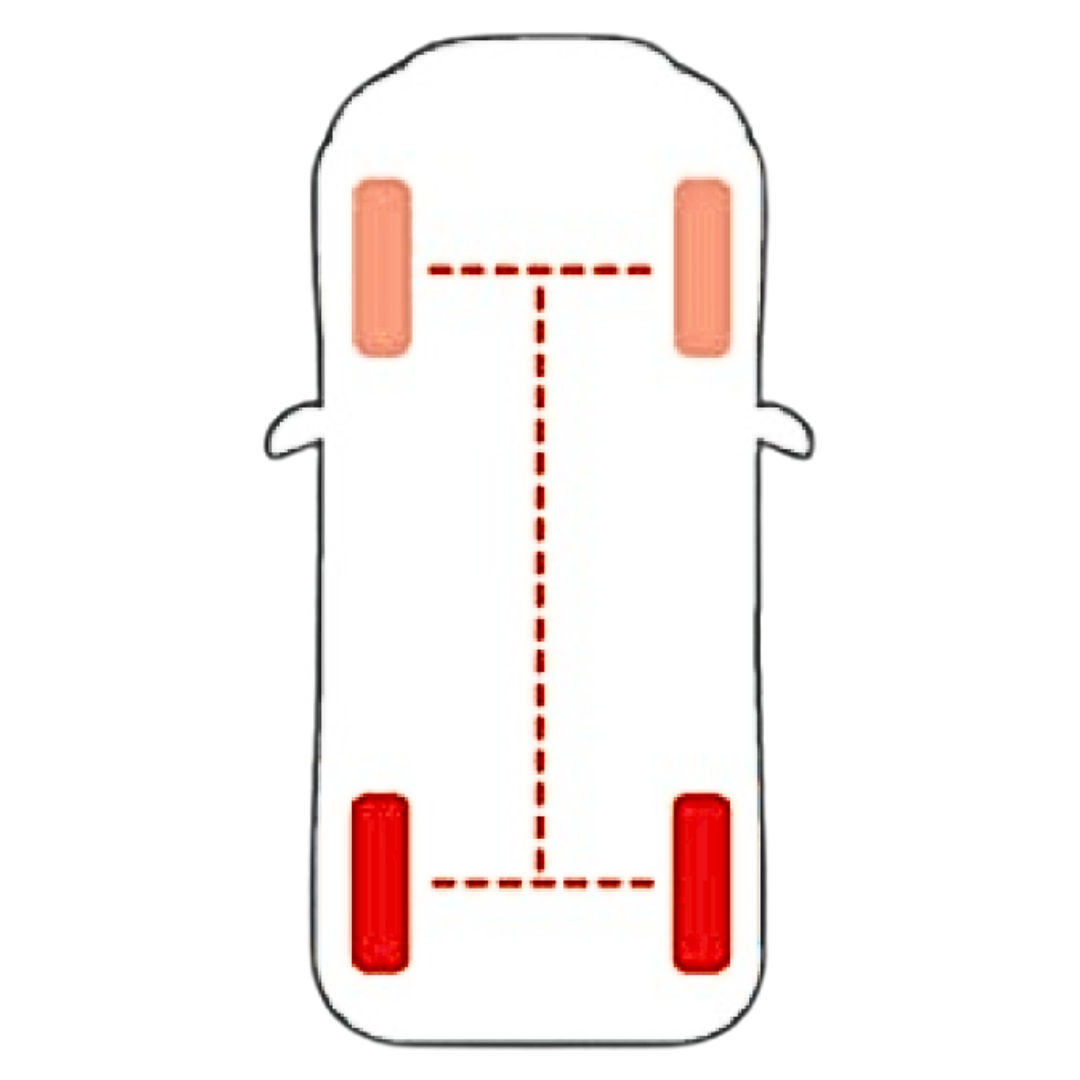
A four-wheel drive uses a distinct gearbox (a transfer case) and two driveshafts to send power to all four wheels, providing the vehicle with extra grip. As the front and back driveshafts are locked together, this ensures equal power is sent to all the wheels, so they all work together to move the vehicle.
Of all the drivetrains available, a 4WD has the most significant torque and power, making it the preferred choice of vehicle for heavy loads.
Pros And Cons Of 4WD Cars
| Pros | Cons |
| Perfect for driving off roads or on challenging terrain | The heavier drivetrain system means heavy fuel consumption |
| Provides the necessary traction and grip needed for climbing hills | Has a more complex drivetrain system which requires regular and professional maintenance |
| Suitable for carrying heavy loads or towing other vehicles | The heavier weight can impact vehicle handling, acceleration, and braking |
What Is An AWD Car?
If a front-wheel drive powers the front wheels and a rear-wheel drive powers the rear wheels, that means an all-wheel drive delivers power to…? You guessed it right – all the wheels! AWD cars typically encompass SUVs, crossovers, high-performance vehicles, and even a few sedans.
As all the wheels work together to move the car, it provides even better traction while driving and in challenging environments – like on wet roads and climbing hills. While the AWD systems are mostly always switched on, they rely on sensors to detect if a wheel needs more power and channels it accordingly.

Pros And Cons Of AWD Cars
| Pros | Cons |
| Better acceleration, handling, and stability | Has a heavy drivetrain system and body, which means even heavier fuel consumption |
| Excellent grip and traction on wet roads and other challenging environments | Has more parts compared to other drivetrains, requiring more upkeep and costs |
| Automatic power distribution to all wheels |
Find The Drivetrain That Suits You Best
When you look for a car to buy, don’t forget to take it for a test drive, check the drivetrain, and check all the other important parts of the car before deciding if it’s the one for you. The vehicle you purchase should be one that you can drive confidently in any terrain, rain or shine, and day or night.
After all, the best car and drivetrain for you depends on your needs and driving habits. Avoid rushing into decisions and take your time to evaluate its suitability. And don’t forget – you can always count on Mudah.my to find a used car for sale in Malaysia!